
Valuation · 23 Oct 2026
Rates Rose Again. Here's What It Means for Your Business's Value
By Everest CPBB
Author / publisher
Everest CPBB
Everest Commercial Property & Business Brokers — business buying, selling and appraisal services across Victoria, New South Wales and Queensland. Individual authorship is not recorded.
Expert review
No expert reviewer recorded
This article has no recorded article-specific expert review.
Finance profile: Lee
Chartered Financial Analyst (CFA)
Former institutional banker in Australia and Singapore.
Expertise and credential confirmed by Lee. Article-specific authorship and review have not been recorded.
How Rising Interest Rates Are Changing What Your Business Is Worth
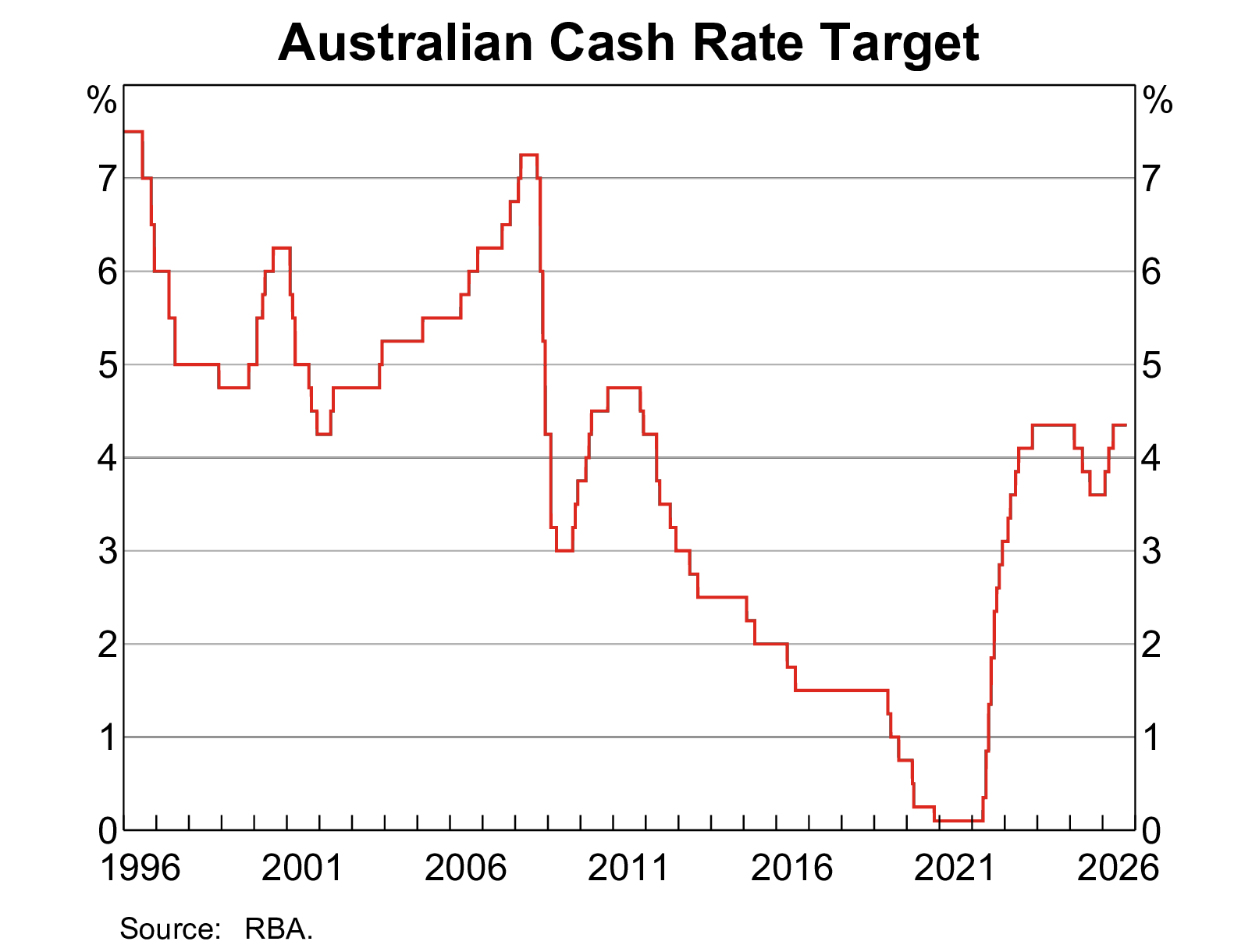
On 29 September, the Reserve Bank lifted the cash rate target to 4.60%. It was the fourth rate increase this year, after rises in February, March and May, and the Board said inflation remains elevated.
If you own a business, you probably think of rate rises as a mortgage or overdraft issue. But interest rates are one of the biggest forces behind what buyers will pay for your business.
Why interest rates move business values
1. Buyers' required returns go up.
Valuation is about what a buyer expects to earn compared with their other options. When rates rise, safer investments like term deposits and bonds pay more, so buyers expect higher returns from a business to justify the risk. In valuation terms, the discount rate or capitalisation rate goes up, and the price a given profit can support goes down.
2. Borrowing gets more expensive.
Most small business sales involve some buyer finance. Higher repayments mean a buyer's bank may lend less, or the buyer can afford to pay less, for the same level of earnings.
3. The buyer pool shrinks.
When finance is tighter, fewer buyers qualify, and sales can take longer. Sellers who held out for last year's multiple often find the market has moved.
4. Deal structures change.
In higher-rate periods, expect more conversations about vendor finance, earn-outs and staged payments as buyers and sellers bridge the gap.
What this can look like (illustrative example only)
Say a business has maintainable earnings of $500,000. At a capitalisation rate of 25%, it's valued at $2.0 million. If rising rates push the rate to 28%, the same earnings support about $1.79 million, a drop of roughly 11%. The business hasn't changed at all. The market's expectations have.
This is a simplified illustration, not a prediction. Every business is different, and the actual effect depends on your industry, your earnings quality and your buyers.
What holds its value in a higher-rate market
Businesses tend to hold up better when they have:
- Recurring or repeat revenue and loyal customers
- Clean, well-documented financials that lenders and buyers can trust
- Low dependence on the owner to keep things running
- Strong, stable margins with manageable capital needs
Diversified customers and suppliers
Improving these areas won't change the interest rate, but it can protect your multiple.
Why now is a good time to know your number
Whether you plan to sell next year, in five years or never, understanding your value matters:
- It shows whether your business is a stronger asset than you think, or where it's exposed.
- It helps you decide when to sell, when to invest and when to wait.
- It gives you a baseline to track as conditions change.
Find out where you stand, free and in minutes
At Everest Valuation, Australian business owners can get an instant estimate of their business's value in under 5 minutes. Tell us a few basic metrics and the tool uses best-practice valuation techniques and real-market comparables to estimate where you stand.
Get your free business valuation →
If you'd like to talk it through, our team at Everest Commercial Property & Business Brokers is happy to help you understand what the numbers mean for your plans.
This article is general information only and isn't financial, tax or investment advice. Online estimates are indicative and not a formal valuation. Consider seeking professional advice before making decisions about buying or selling a business.
Primary sources and further reading
Each note identifies the guidance supported by its source; it is not evidence for every claim in this article.
- RBA — Monetary Policy Decision, 29 September 2026
The Board increased the cash rate target by 25 basis points to 4.60 per cent and said inflation remains elevated.
- RBA — Cash rate target history
The cash rate target rose in February, March, May and September 2026. It does not show how any business's value changes.
- Australian Government — value your business
Business value can be assessed using assets, earnings and comparable market information. The article's capitalisation-rate example is illustrative only.
General information, not personal legal, tax, financial or migration advice. Requirements depend on the transaction and can change; confirm current rules with the relevant authority and your independent advisers.
Ask our insights
Questions about buying a business?
Newsletter
Get new insights in your inbox
Practical articles on buying, selling and valuing businesses — sent when we publish. No spam, unsubscribe any time.
See our Privacy Policy.